

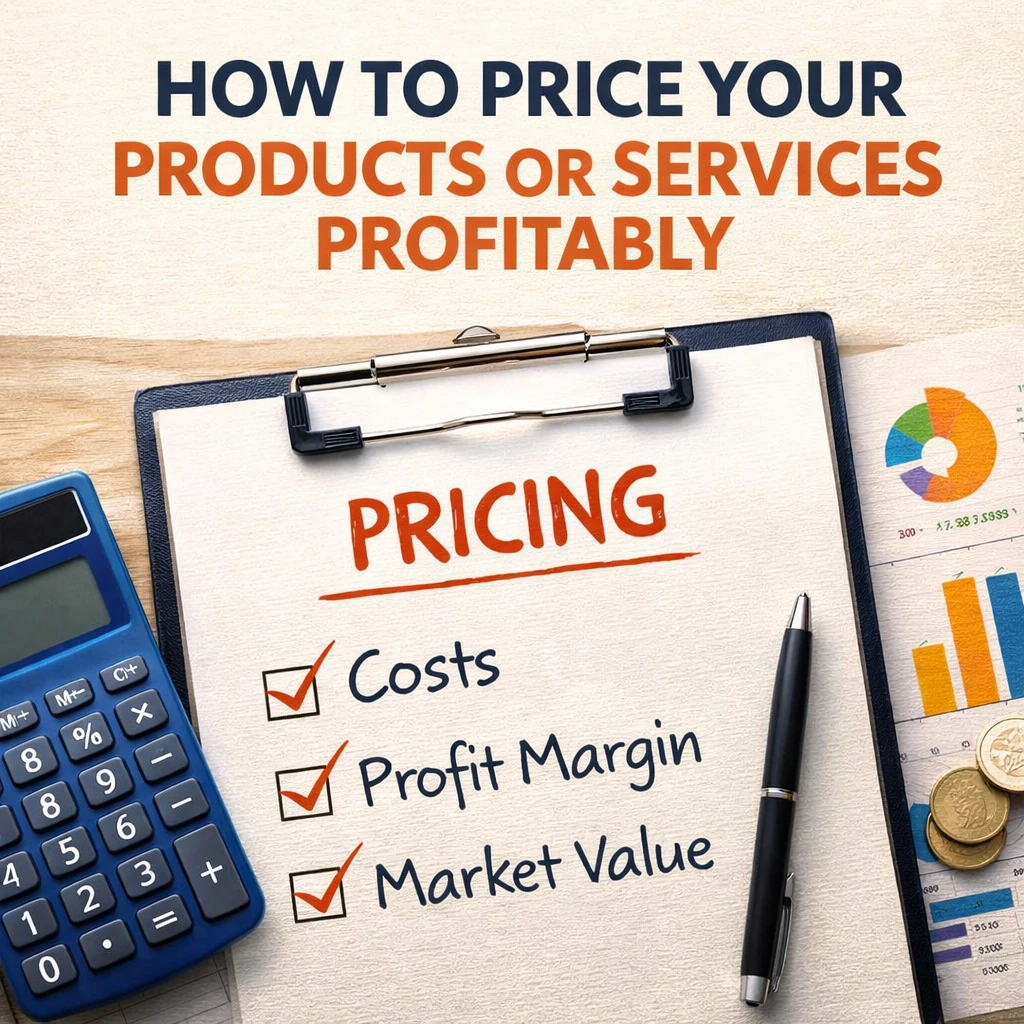
Pricing is one of the most important decisions in any business. Set your prices too low and you struggle to make a profit. Set them too high and customers may not buy. The goal is to find a balance where your price covers your costs, delivers value to customers, and leaves you with a healthy margin.
Start With Your Costs
Before you think about profit or market pricing, you need a clear understanding of your costs. This is the foundation of your pricing strategy.
Include:
- Direct costs (materials, transport, labor)
- Indirect costs (rent, utilities, internet, marketing)
For example, if it costs you K50 to deliver a service, pricing below that guarantees a loss.
Add a Profit Margin
Once your costs are clear, the next step is to build profit into your price. This ensures your business is sustainable and worth your effort.
A simple approach:
- Cost + profit = selling price
If your cost is K50 and you want a 40 percent margin:
- K50 + K20 = K70 selling price
Your margin should reflect your effort, risk, and long-term goals.
Understand Market Prices
After setting a base price, you need to compare it with the market. Customers rarely decide in isolation, they look at alternatives.
Research:
- What competitors charge
- What customers are used to paying
- What alternatives exist
You do not have to be the cheapest, but your pricing must make sense in your market.
Price Based on Value, Not Just Cost
While costs give you a baseline, value determines how much customers are willing to pay. This is where pricing becomes strategic.
Ask:
- How much is this worth to the customer?
- Does it save them time, money, or effort?
If your service delivers strong results or convenience, you can justify a higher price.
Test Different Price Points
Pricing is not something you set once and forget. It should be tested and refined based on real customer behavior.
Test:
- Different prices with different customers
- Promotional offers
- Bundled services
If customers accept your price easily, you may be underpricing. If they hesitate, you may need to adjust.
Consider Your Positioning
Your price communicates how your business is perceived. It plays a role in shaping your brand in the market.
- Low price = budget option
- Mid price = balanced value
- High price = premium service
Choose a pricing level that aligns with your target customers and the image you want to build.
Avoid Underpricing
Many new businesses set low prices out of fear of losing customers. In reality, this often creates bigger problems over time.
This can lead to:
- Low profits
- Difficulty scaling
- Perception of low quality
It is better to charge a fair price and clearly communicate your value.
Review and Adjust Regularly
As your business grows, your pricing should evolve. Costs change, markets shift, and your value may increase.
Review:
- Changes in costs
- Customer feedback
- Demand levels
Make adjustments when necessary to stay profitable and competitive.
Final Thought
Profitable pricing is not about guesswork. It is about combining clear cost awareness, market understanding, and value perception. When these align, your pricing becomes a strong tool for growth rather than a constant challenge.

