

Nshima is a daily necessity for millions of Zambians. This factual, grounded guide covers everything you need to know about entering the mielie meal milling and distribution industry in Zambia, from sourcing maize and understanding FRA policy to equipment options, licensing, and pricing.
Understanding the market
Zambia's per capita maize consumption exceeds 100 kg per person per year, with the bulk of that milled into mealie meal for household use. Nshima, the stiff dough-like staple made from finely milled white maize, is consumed across all income levels and across all ten provinces. This makes mealie meal demand relatively inelastic. People need it regardless of price, which explains why price spikes consistently attract government intervention.
The 2024/25 agricultural season was a bumper year. The Zambia Statistics Agency reported national maize production of approximately 3.65 million metric tonnes, up sharply from just 1.51 million tonnes during the El Nino-affected 2023/24 season. Annual domestic consumption sits at roughly 2.8 million tonnes, covering food, livestock feed, and industrial use. A surplus now exists, which has pushed maize grain prices down and improved conditions for millers sourcing raw material.
"Mealie meal remains central to the economy. Per capita maize consumption exceeds 100 kg annually, with most of it milled into meal for household use." - Feed Business MEA, April 2026
The two main grades sold in Zambia
Before buying a single piece of equipment, understand what you are actually going to mill and sell. In Zambia, the market is structured primarily around two grades:
|
Grade |
Description |
Avg. retail price (25kg, Sept 2024) |
Consumer base |
|
Breakfast Meal |
More refined, finer texture. Used for nshima. Higher milling extraction rate of 72-78%. |
~K334 per 25kg bag |
Urban households, middle-income |
|
Roller Meal |
Coarser, less refined. More fibre retained. Lower price point. |
~K291 per 25kg bag |
Lower-income urban and rural households |
These prices, published by the Zambia Statistics Agency in September 2024, reflect a significant increase over the previous year, driven partly by the 2023/24 drought. With the bumper 2024/25 harvest, the Millers Association of Zambia (MAZ) announced nationwide price reductions of between K50 and K130 per bag across major brands. As a new entrant, you will need to price competitively within these ranges.
Major established millers include National Milling Corporation (NMC), Antelope Milling, FVG Milling, Simba Milling, and African Milling. The Zambia National Service also mills and sells under the Eagle brand at subsidised prices. Knowing your competitors is essential before you set your pricing.
The role of government: what every miller must know
No discussion of mielie meal business in Zambia is complete without understanding the role of the state. The Food Reserve Agency (FRA) is the single most important institution in this sector. The FRA purchases maize from farmers at government-set prices, stores it, and then releases it to millers, often at below-market rates, with the intention of stabilising mealie meal prices for consumers. In January 2025, the FRA purchased over 1.6 million metric tonnes of maize in a record procurement exercise.
The Millers Association of Zambia (MAZ) negotiates directly with the FRA and government on tripartite pricing agreements. These agreements set recommended retail price bands for 25kg bags at specific points around the country. When you register as a miller and join MAZ, these agreements affect you directly.
Important: The government has historically imposed export restrictions on maize during drought years to protect domestic supply. In April 2026, Zambia lifted those restrictions following the surplus harvest, requiring exporters to obtain permits through the Zambia Electronic Single Window (ZESW) platform. Policy can shift quickly. Track FRA and MAZ announcements closely as part of your business planning.
Sourcing your maize
Smallholder farmers produce approximately 93% of Zambia's maize crop, meaning your supply chain is largely built on relationships with individual farmers or cooperatives in the key growing provinces: Eastern, Southern, Central, and Lusaka. These farmers sell through several channels: directly to the FRA, to grain traders, to aggregators at district markets, or informally to mills.
Buying directly from farmers at harvest time (typically May to July) gives you access to the lowest prices of the year. Maize that is properly dried, stored, and treated can retain its milling quality for several months, giving you a buffer against off-season price spikes. Post-harvest storage losses are a known national challenge. Invest in proper metal silos or hermetic bags from the outset; poor storage will cost you more than the storage infrastructure itself.
If you qualify as a miller under FRA's tripartite scheme, you may access government-released maize at preferential rates. Contact the Millers Association of Zambia to understand eligibility requirements and how to register.
Equipment and scale options
The scale of your operation will determine your equipment requirements. Zambia's milling sector spans everything from small-scale hammer mills serving a single community to large roller-mill plants processing hundreds of metric tonnes per day. The three realistic entry points for a new business are:
|
Scale |
Capital required |
Daily capacity |
Best suited for |
|
Hammer mill (community) |
Under $5,000 |
0.5 to 2 tonnes |
Rural areas, limited electricity, can run on diesel or solar |
|
Small roller mill |
$15,000 to $50,000+ |
5 to 25 tonnes |
Township or peri-urban areas with stable electricity |
|
Industrial roller mill |
$200,000+ |
100+ tonnes |
High-volume urban supply; requires full sourcing and distribution infrastructure |
Electricity reliability is a critical operational factor. Load-shedding has historically reduced milling capacities and driven price increases. A diesel or solar backup system is a practical necessity, not a luxury.
Legal registration and licensing
Register your business through the Patents and Companies Registration Agency (PACRA). A limited company registration is recommended for a milling operation. You will also need a health and operating licence from your local council, compliance with the Zambia Bureau of Standards (ZABS) for any packaged food product, and registration with the Zambia Revenue Authority (ZRA) for tax purposes. If your operation qualifies for VAT, register from the start.
Consider joining the Millers Association of Zambia (MAZ). Membership gives you access to sector intelligence, participation in tripartite pricing agreements with the FRA, and a recognised voice in policy discussions that directly affect your business.
Packaging and branding
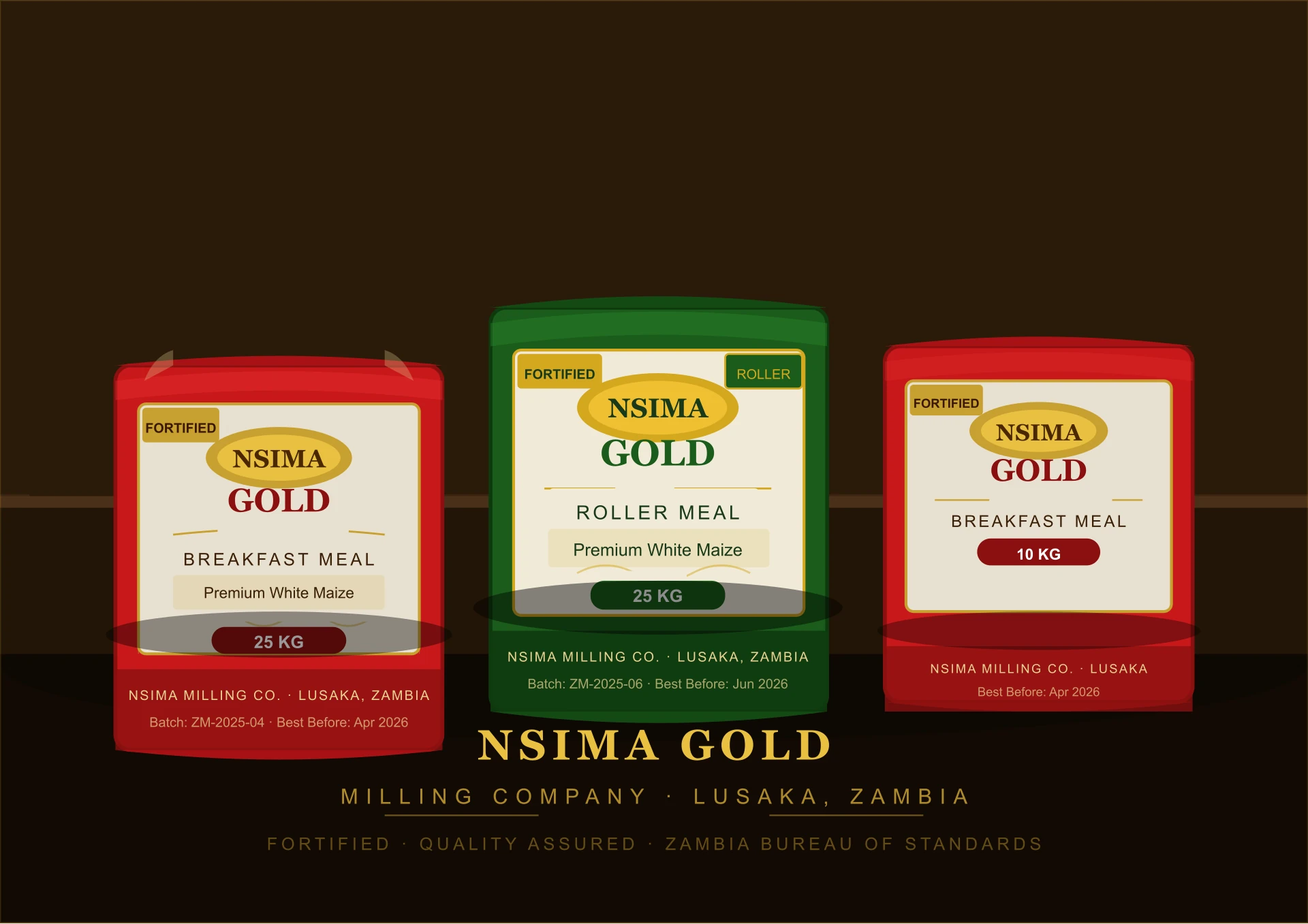
In supermarkets and chain stores across Lusaka, branded mealie meal sits on shelves in 25kg and 10kg bags alongside products from National Milling, Antelope, and Simba. Your brand identity and packaging quality affect how retailers and consumers perceive you relative to these established names.
The MAZ has pushed for millers to print recommended retail prices directly on bags. This practice, supported through the tripartite agreement, helps ensure end consumers pay appropriate prices, especially in areas far from milling centres where transport costs add significantly to retail prices.
Distribution: getting to market
Lusaka and the Copperbelt (Kitwe, Ndola, Mufulira) are the primary consumption centres. Retail chains such as Shoprite, Pick n Pay, and Choppies, as well as independent wholesalers and tuck shops, are your distribution channels. Wholesale agreements with distributors who serve peri-urban and rural areas extend your reach without requiring your own transport fleet immediately.
Rural areas pay more for mealie meal due to transport costs. A mill located close to a surplus-producing province, such as Eastern or Central Province, can serve rural communities at lower prices while also supplying urban centres if transport logistics are managed well.
Nshima feeds Zambia. The mill that feeds nshima matters.
A mielie meal business in Zambia is not a casual venture. It is a serious agro-industrial undertaking that operates within a tightly regulated environment, subject to FRA policy, MAZ agreements, and the expectations of millions of consumers for whom mealie meal is a daily necessity. Done well, with proper sourcing, reliable equipment, and compliance with the regulatory framework, it is also a resilient and socially meaningful business. Start at the scale your capital allows. Build relationships with farmers and retailers. Understand the policy environment. And mill consistently, because in Zambia, nshima is not optional.

